Southwest Ethiopia
Kaffa
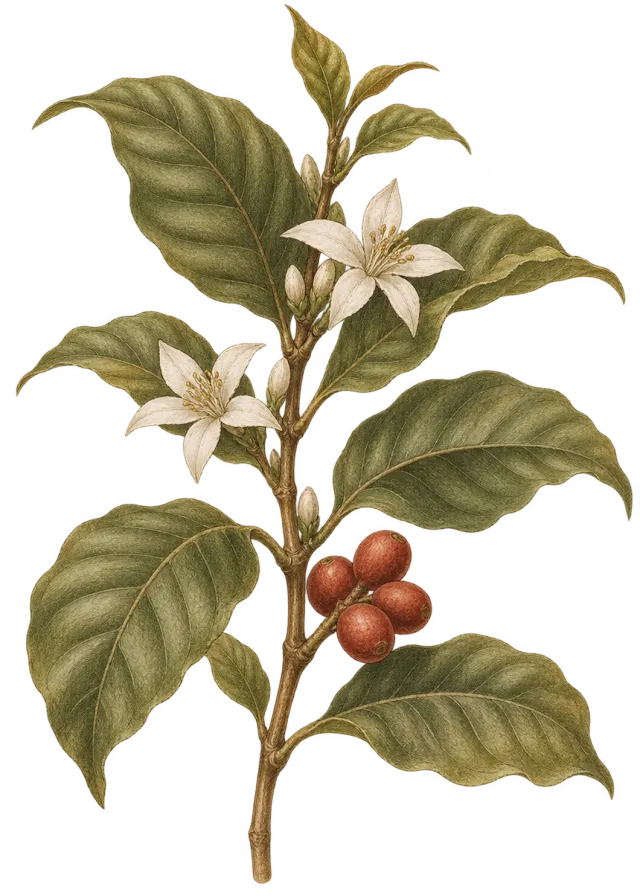
Kaffa’s forest landscapes shelter wild Arabica populations. Coffee also grows under forest canopies managed by local communities.
- Map reference
- Bonga · 7.27° N, 36.24° E
- Coffee context
- Forest coffee and Arabica conservation
 Ethiopian Coffee
ቡና Arabica’s birthplace
Follow coffee from Ethiopia’s highland forests to the first pour, and discover the traditions that bring people together over a cup.
Browse coffee varieties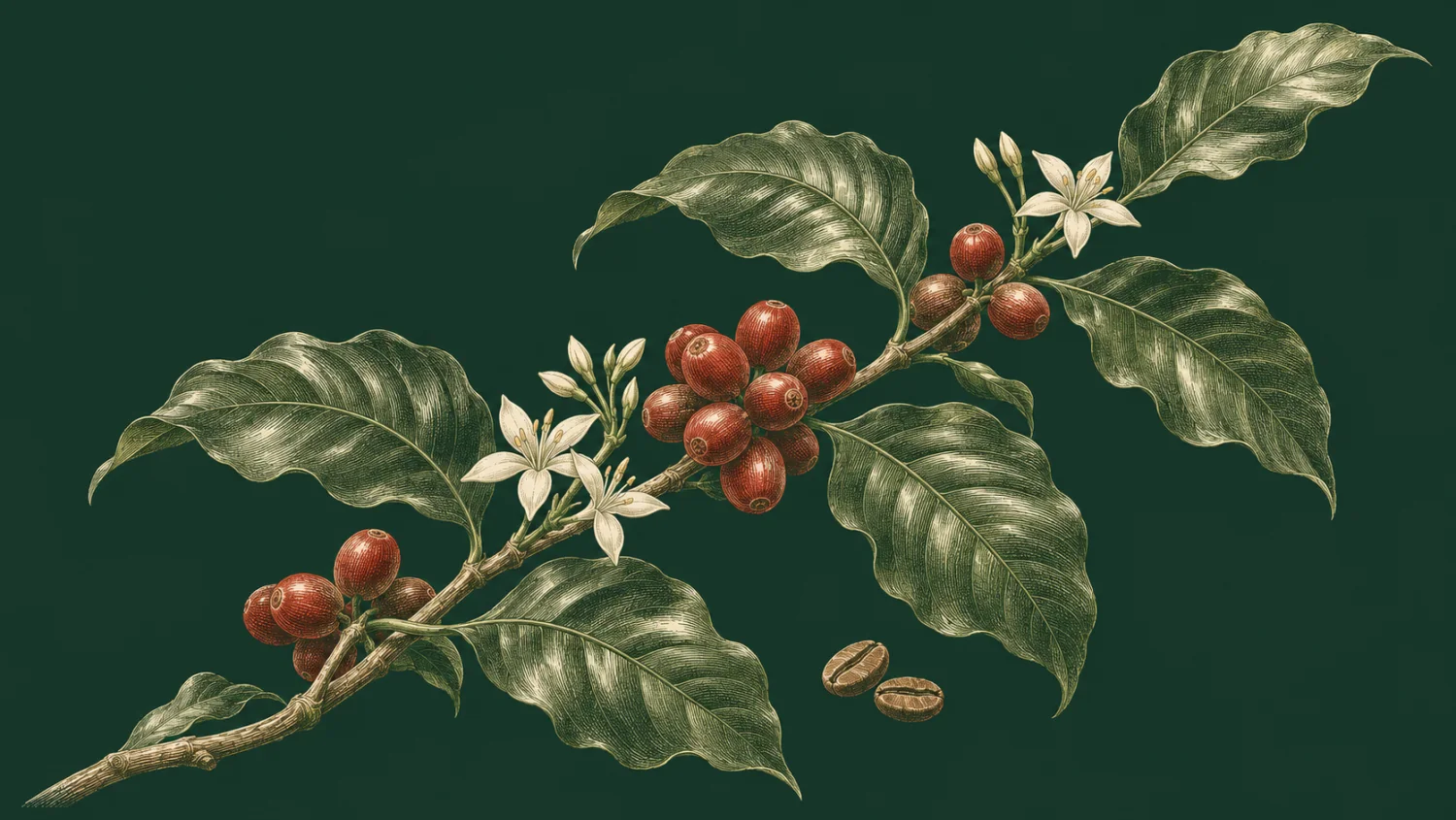
Scroll through 10 stages to see how coffee goes from ripe fruit to the first pour.
1 of 10 · Harvest
Coffee cherries ripen at different speeds along the same branch. Selective picking lets growers gather ripe fruit and leave unripe cherries for a later pass.
A cherry usually contains two seeds. A single rounded seed is called a peaberry.
2 of 10 · Process
The first processing decision is whether the fruit will stay around the seed during drying.
Processing records describe how a lot was made and can vary between producers in one origin.
3 of 10 · Wash
For washed coffee, water carries away the loosened mucilage after depulping. Depending on the mill, the producer may loosen it by fermenting the coffee or remove it mechanically.
In the natural process, the whole fruit usually goes straight to drying after sorting.
4 of 10 · Dry
Producers spread fruit or parchment coffee in layers, often on raised beds. Air can circulate around the bed while workers turn the coffee for more even drying.
Drying prepares the coffee for storage and milling.
5 of 10 · Mill
A dry mill hulls the stored coffee. It removes dried fruit and parchment from naturals, or the parchment layer from washed coffee.
Green coffee is the unroasted seed.
6 of 10 · Pack
Milled green coffee is weighed, bagged, and marked so buyers and roasters can identify the lot. Some shippers use a protective inner liner with an outer sack.
This is green-coffee packaging. Roasted coffee is packaged separately for retail.
7 of 10 · Roast
The seeds lose moisture, brown, expand, and develop new aromas as they roast. In many Ethiopian coffee ceremonies the host stirs green coffee in a shallow pan over heat.
A pan roast is one traditional preparation for the Ethiopian coffee ceremony.
8 of 10 · Grind
Breaking the roasted coffee into smaller particles increases the surface area in contact with brewing water.
The grounds are often prepared just before brewing.
9 of 10 · Brew
Coffee grounds and water come together in the jebena, a clay brewing vessel with a rounded body and narrow neck.
ጀበና · Jebena
10 of 10 · Serve
The host pours small cups of hot coffee for the guests. Conversation and hospitality are as much a part of the gathering as the brew.
Serving customs and accompaniments vary across communities and households.
Follow each path to see when the fruit is removed.
Origin map
Explore 12 coffee places across Ethiopia. Select a numbered pin or place name to see what grows there and how the origin is used.
Southwest Ethiopia
Kaffa’s forest landscapes shelter wild Arabica populations. Coffee also grows under forest canopies managed by local communities.
Southwestern Oromia
Jimma is both a coffee-growing area and a research hub. The Jimma Agricultural Research Center develops and evaluates coffee selections for Ethiopian growers.
Jimma Zone, Oromia
Limu is an origin name used in the southwest. The Ethiopian Commodity Exchange also documents Limmu Seka and Limmu Kossa among the districts in its Jimma origin specification.
Western Oromia
Nekemte is a trading reference for coffees from the wider western growing areas associated with Wellega. An individual lot may be labeled with a more specific producing district.
Southwest Ethiopia
Tepi is a southwestern growing area identified in the national coffee guide. It sits within the broader forested landscape of southwestern Ethiopia.
Southwest Ethiopia
Bebeka is associated with estate coffee in southwestern Ethiopia. The name identifies a producing area in the national guide.
Southwest Ethiopia
Bench Maji is a name used in the national guide for a southwestern coffee-growing area near Kaffa and the Bebeka estate.
Gedeo, southern Ethiopia
Yirgacheffe is both a town and a coffee origin name. Coffees bearing the name can come from different farms and washing stations across the area.
Southern Ethiopia
Sidama includes many highland growing communities. Naming a district, producer, or washing station gives more detail than the broad Sidama name alone.
Sidama
Bensa is a coffee-producing district in Sidama. The Ethiopian Commodity Exchange lists Benssa in its unwashed Sidama coffee specification.
Southern Oromia
Guji is a coffee-growing zone in southern Oromia. Shakiso is one locality reference within the zone, with coffees sourced from multiple producers and stations.
Eastern Ethiopia
Harar is a historic trade name for coffee from eastern Ethiopia. The exchange’s unwashed coffee contracts distinguish eastern origins under the Harar name.
ቡና
Making coffee is a way to welcome guests and spend time together. Some hosts set out fresh grass or flowers and burn incense as the beans roast. Customs vary by household and community.
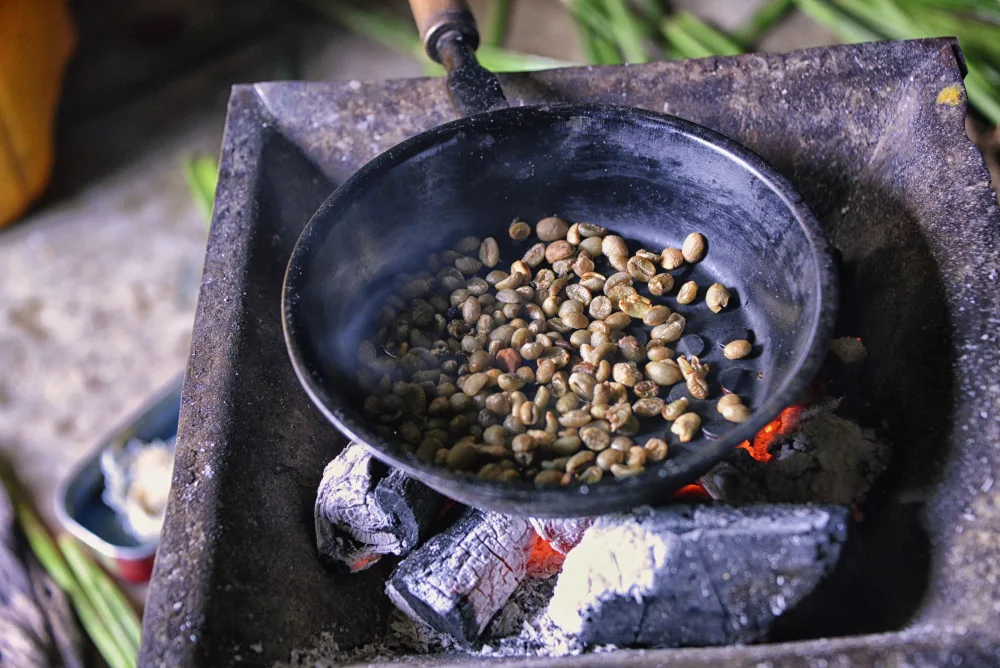
The host stirs green coffee in a shallow pan over heat. As the beans darken, the host may bring the pan around so guests can smell the roast.
Rod Waddington / Wikimedia Commons · CC BY-SA 2.0 · Resized and cropped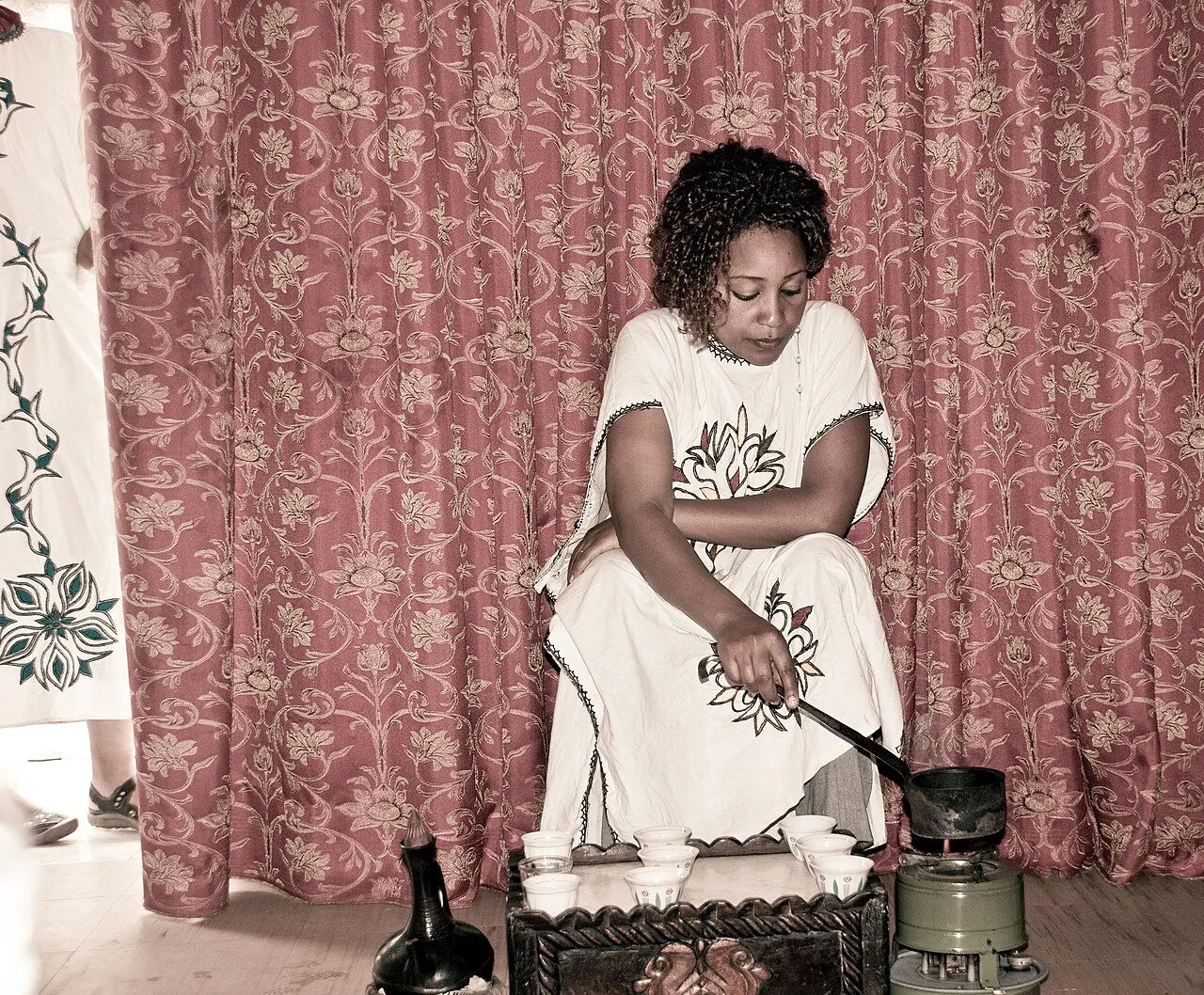
The roasted beans are pounded in a mortar. The host adds the grounds to hot water in a jebena, a round-bellied clay pot with a narrow neck.
Irene2005 / Wikimedia Commons · CC BY 2.0 · Resized and cropped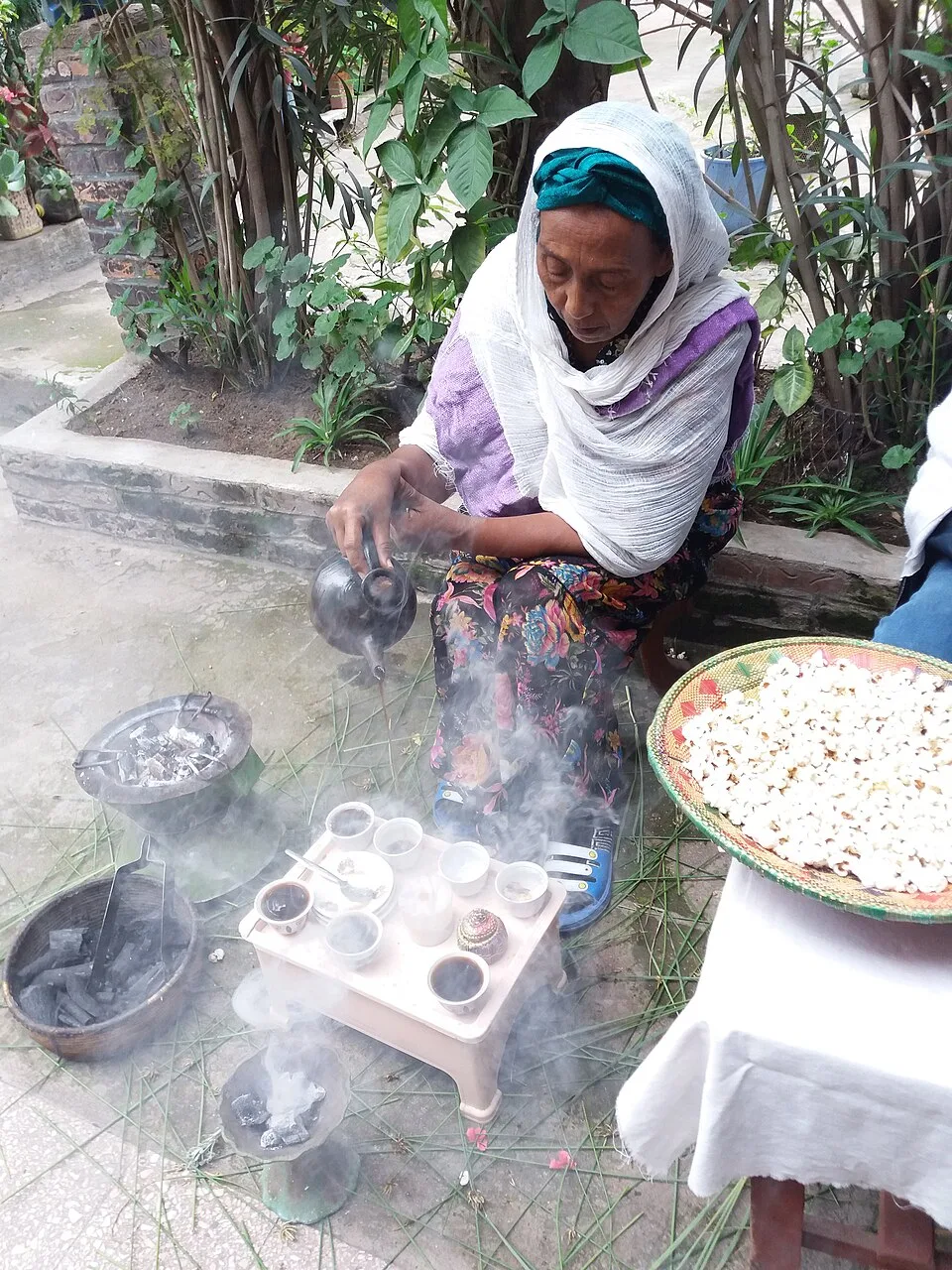
Coffee is poured into small handleless cups called sini. Guests talk over successive rounds, sometimes with popcorn or toasted seeds.
Abyssinian cat / Wikimedia Commons · CC BY-SA 4.0 · Resized and croppedThe first pour, served from the freshly brewed pot.
The second pour, after heating water with the same grounds.
The third and final pour, known as the blessing.


